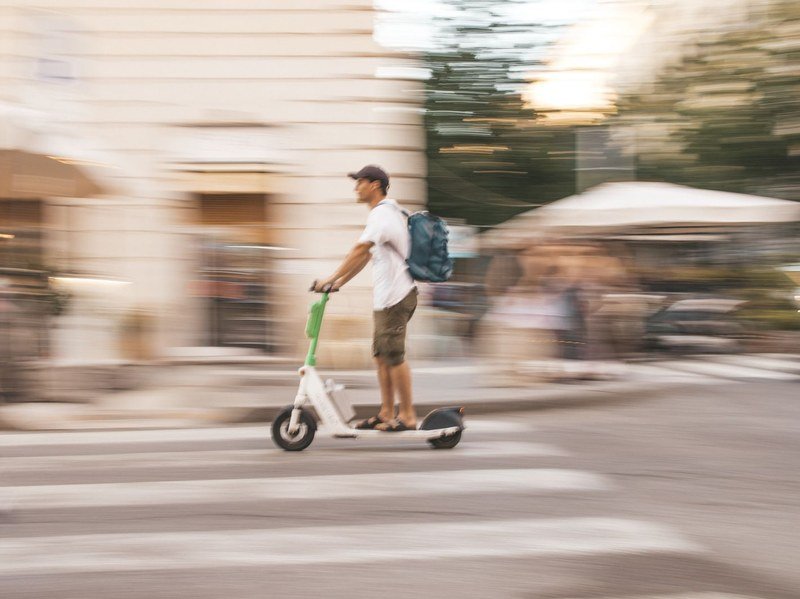
New York law does not treat an e-bike or an e-scooter as a motor vehicle. Vehicle and Traffic Law §125 excludes both by name. That single classification decides who pays your medical bills, whether the insurance company can force you to clear the “serious injury” threshold, and in many cases whether there is any auto policy in the picture at all.
Riders learn this after the crash, usually from an adjuster who has no incentive to explain it.
The Injury Group represents e-scooter riders, e-bike riders, delivery workers, and people struck by them across Queens. Call 212-468-4878 for a free case review. We work on contingency, so you owe nothing unless we recover for you.
What the Queens Crash Data Shows
We pulled every NYPD-reported collision in Queens from 2021 through 2025 from NYC Open Data and isolated the crashes coded as involving an e-bike or e-scooter.
- 3,061 e-bike and e-scooter crashes in Queens over five years, injuring 2,725 people and killing 16.
- These crashes injure someone 89 times out of 100. Across all 91,540 Queens collisions in the same period, the rate is 50 per 100. A micromobility crash is roughly 1.8 times more likely to produce an injury than a typical Queens crash.
- Queens ranks second citywide behind Brooklyn for reported micromobility crashes.
The reason for that injury rate is unsurprising when you think about what surrounds a rider. There is no crumple zone, no airbag, and no seatbelt. The rider absorbs the collision.
One caution about this data, since other sites quote it carelessly. Reported Queens micromobility crashes appear to fall by half in 2025 while total Queens crashes stayed flat at roughly 17,900. That pattern points to a change in how NYPD codes these vehicles rather than a sudden safety improvement, so we do not present it as a real decline.
Class 1, Class 2, Class 3: Why the Category Matters
New York defines a “bicycle with electric assist” in VTL §102-C by three classes, and the class affects where you may legally ride and how a defense lawyer will characterize your conduct.
- Class 1 assists only while you pedal, and the motor cuts out at 20 mph.
- Class 2 can propel the bike without pedaling and cannot assist past 20 mph.
- Class 3 exists only in cities of one million or more, which in practice means New York City, and is the faster throttle category used by most delivery riders.
All three must be under 36 inches wide with a motor under 750 watts and working pedals. An electric scooter is a separate definition under VTL §114-E: under 100 pounds, handlebars, a floorboard or seat, and a top motor-only speed of 20 mph.
Anything faster or more powerful falls outside these definitions. A souped-up scooter capable of 40 mph is not a legal e-scooter, which changes the analysis and gives the other side an argument. It rarely ends your case, because New York applies pure comparative negligence, but it needs to be handled deliberately rather than discovered at a deposition.
The No-Fault Gap
This is the part that costs riders the most money, and it cuts in two directions.
If you were riding. No-Fault benefits flow from a motor vehicle policy. Because §125 excludes e-bikes and e-scooters, your own device carries no No-Fault coverage. When a car hits you, you can generally claim against that vehicle’s No-Fault policy, and MVAIC may be available if the driver fled or was uninsured. When no motor vehicle is involved at all, such as a fall caused by a defective battery or a pothole, there is usually no No-Fault at all, and medical bills land on your health insurance.
If an e-bike or e-scooter hit you. Here the classification helps you. Insurance Law §5104(a) limits non-economic damages to cases of “serious injury” only in actions between covered persons arising from the use of a motor vehicle. An e-bike is not a motor vehicle.
In Hazzard v. V & L Pizzeria & Restaurant, 2026 NY Slip Op 31859(U), a pedestrian struck by an e-bike sued over facial scarring. New York County Supreme Court denied the defense summary judgment motion and held that the §5104 serious injury threshold did not apply, because the collision involved an e-bike, which VTL §125(e) excludes from the definition of a motor vehicle.
For a pedestrian hit by an e-bike, that removes the single most common defense in New York injury litigation. We have not seen a competing Queens firm page mention it.
Delivery Riders and the Company That Dispatches Them
The defendant in Hazzard was a restaurant, which is the point most riders and pedestrians miss. An individual rider often has no meaningful assets and no insurance. The business that sent them out may have both.
Potential defendants beyond the rider include the restaurant or store that employs them, the delivery platform depending on how the relationship is structured, and the owner of the bike where the business supplies equipment. Where a rider was working at the time, a workers’ compensation claim may run alongside a third-party case. Our Queens workers’ compensation attorneys coordinate both so one does not undercut the other.
Identify the employer at the scene. Photograph the thermal delivery bag, any branding on the bike, and the app open on the rider’s phone if they will show you. Those details are what convert a claim against an uninsured individual into a claim against an insured business.
Defective Batteries and Fire Cases
Lithium-ion battery failures are a distinct category of e-bike case, and they are product liability claims rather than traffic claims. Uncertified batteries, mismatched aftermarket chargers, and cells damaged in an earlier crash can ignite while charging indoors.
Defendants can include the manufacturer, the importer, the retailer, and sometimes a landlord who ignored a known hazard. Preserve the device. A burned battery pack, the charger, and the purchase records are the case. Our Queens product liability lawyers handle these claims, and the deadlines differ from a standard collision case.
Injuries We See in Queens Micromobility Cases
Head injuries. New York does not require helmets for adult Class 1 or Class 2 riders, and riders frequently go without. Not wearing one does not bar recovery, though insurers will raise it. Our Queens brain injury lawyers handle the serious ones.
Fractures. Wrists, collarbones, and ankles break when a rider is thrown forward over the handlebars. A fracture also satisfies the serious injury threshold outright in cases where the threshold applies.
Road rash and scarring. Facial scarring carries substantial value, as Hazzard illustrates.
Dooring. A driver or passenger opening a door into a bike lane is a recurring Queens pattern on Northern Boulevard and Queens Boulevard.
Burns. Battery fires cause injuries far more severe than the crash itself.
What to Do After a Queens E-Scooter or E-Bike Crash
- Call 911 and insist on a police report. Officers sometimes treat these as minor. A report that records the vehicle type is important later.
- Photograph the device, the damage, and the scene before anything is moved, including any delivery branding.
- Get the insurance information of every vehicle involved, and the employer of any delivery rider.
- Seek medical care the same day. Adrenaline masks head injuries in particular.
- Keep the device and the battery if a malfunction or fire may be involved. Do not discard or repair it.
- Do not give a recorded statement before speaking with a lawyer.
Deadlines
Three years from the crash for a personal injury claim under CPLR §214. Two years for wrongful death. If a city vehicle or a public entity is involved, a notice of claim may be due within 90 days, and if an MTA bus was involved the rules in our Queens bus accident practice apply instead. MVAIC claims for hit-and-run or uninsured drivers carry their own early notice requirements.
Why Queens Riders Call The Injury Group
Our managing attorney, Margarita Moshe, RPh., Esq., practiced as a pharmacist for 16 years before earning her law degree from Hofstra University’s Maurice A. Deane School of Law with a concentration in Health Law and Clinical Bioethics. When an insurer disputes whether a crash caused your injury, she reads the medical record herself.
We take these cases on contingency. No fee to speak with us, no retainer, and no bill unless we recover for you.
We represent riders and pedestrians throughout Queens, including Astoria, Long Island City, Jackson Heights, Elmhurst, Corona, Forest Hills, Kew Gardens, Flushing, Bayside, Whitestone, Jamaica, Queens Village, Ozone Park, Richmond Hill, Rego Park, Woodside, Maspeth, Ridgewood, Rockaway Park, and Far Rockaway. Our Manhattan office is at 456 W 55th St., Suite 300, and our Long Island office at 269 Fulton Ave., Hempstead.
Frequently Asked Questions About Queens E-Scooter and E-Bike Claims
Does No-Fault insurance cover me if I was riding an e-bike or e-scooter?
Not through your own device. No-Fault benefits come from motor vehicle policies, and Vehicle and Traffic Law §125 excludes e-bikes and e-scooters from the definition of a motor vehicle. If a car struck you, you can generally claim against that vehicle’s No-Fault coverage, and MVAIC may apply if the driver was uninsured or fled. If no motor vehicle was involved, there is usually no No-Fault and medical bills fall to your health insurance.
An e-bike hit me while I was walking. Do I have to prove a serious injury?
Likely not. In Hazzard v. V & L Pizzeria & Restaurant, 2026 NY Slip Op 31859(U), the court held the Insurance Law §5104 serious injury threshold did not apply because an e-bike is not a motor vehicle under VTL §125(e). That removes a defense that would otherwise apply in a car case.
Can I sue the restaurant or delivery company that sent the rider?
Often yes, and it usually matters more. Individual riders frequently have no insurance and no assets, while the business that dispatched them may carry commercial coverage. Liability depends on the employment relationship, so photograph the delivery bag, bike branding, and app at the scene.
What if my e-bike was faster than the legal limit?
It complicates the case without automatically ending it. New York uses pure comparative negligence, so your recovery is reduced by your share of fault rather than barred. Tell your lawyer early so the issue is handled on your terms.
I was not wearing a helmet. Does that ruin my claim?
No. New York does not require helmets for adult Class 1 and Class 2 riders, and the absence of one does not bar recovery. Insurers raise it to argue comparative fault, particularly in head injury cases, and it is an argument we expect and answer.
My e-bike battery caught fire. Is that the same type of case?
No, that is a product liability claim against the manufacturer, importer, or retailer rather than a traffic claim. Preserve the battery, the charger, and your purchase records, because the physical evidence is the case.
What is the difference between a Class 1, 2, and 3 e-bike?
Class 1 assists only while pedaling and stops assisting at 20 mph. Class 2 can propel the bike without pedaling and cannot assist past 20 mph. Class 3 exists only in cities of a million or more people, which in New York State means New York City, and is the faster throttle category most delivery riders use. All three must be under 36 inches wide with a motor under 750 watts and operable pedals.
How long do I have to file?
Three years from the crash under CPLR §214, or two years for wrongful death. A claim involving a city vehicle or public entity can require a notice of claim within 90 days, so call early if any government vehicle was involved.
What does it cost to hire a lawyer?
Nothing upfront. We work on contingency, our fee comes out of the recovery, and you owe nothing if we do not win. The consultation is free.
Talk to a Queens E-Scooter and E-Bike Accident Lawyer
Call The Injury Group at 212-468-4878 (212-GOT-HURT) or email info@theinjurygroup.com. Bring your photographs, the police report number, and the make and model of the device so we can tell you which claims are available.
Sources
- NYPD Motor Vehicle Collisions – Crashes, NYC Open Data, Queens e-bike and e-scooter involved crashes, 2021-2025.
- Hazzard v. V & L Pizzeria & Restaurant, 2026 NY Slip Op 31859(U) (Sup. Ct., N.Y. County).
- N.Y. Vehicle and Traffic Law §102-C, §114-E, and §125.
- N.Y. Insurance Law §5102(d) and §5104(a).
- N.Y. CPLR §214.
Reviewed by Margarita Moshe, RPh., Esq., Managing Attorney, The Injury Group. This page is general information, not legal advice.